


U.S. Army Military Working Dogs: The Four-Legged Combat Multiplier We Keep Rediscovering (and Keep Trying to Shrink)

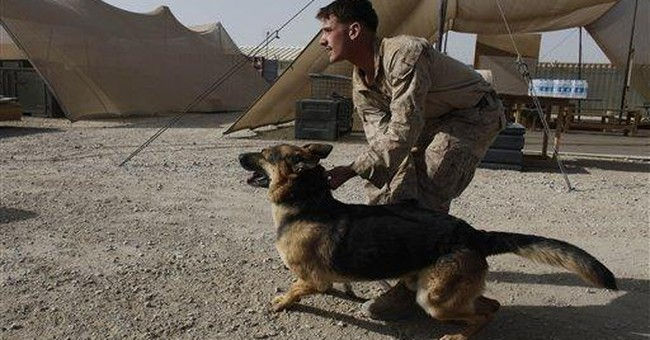
The Truth Up Front: I’m Alive Because of These Dogs
In 2025, the U.S. Army celebrates 250 years. Of those 250 years, Military Working Dogs have officially served for 83, and they’ve repeatedly proven the same thing: they’re the greatest combat multiplier on the battlefield. I’m not saying that for drama. I’m saying it because I’ve lived it. More than once, I’m alive today because a K9 did something a human simply couldn’t do fast enough.
And here’s the part that should make every leader pause: we keep learning this lesson the hard way. We build the capability in war, we pay for it in blood, then we try to shrink it when the war fades from the headlines.
If you’re reading WarHOGG.com, you already understand the mission mindset: keep what works, pressure-test it, refine it, and don’t throw it away because it’s inconvenient or expensive. That’s exactly how we should treat the Army’s Military Working Dog program.
From Battlefield Companions to Capability
Dogs have accompanied soldiers into battle since the beginning. In America’s earliest wars, dogs were common on campaign, traveling with troops and officers and bringing a little normalcy to brutal conditions.
During the Civil War, most dogs were mascots, unit companions that comforted wounded and walked beside men through hell. That era also marked the first use of the term “War Dog,” tied to the story of Sallie of the 11th Pennsylvania, memorialized at Gettysburg.
World War I scaled animal use like nothing before or since. The U.S. Army used more than 16,000 animals, mostly horses, mules, and donkeys for logistics, while dogs and pigeons carried messages. The U.S. still didn’t have a formal MWD program, but mascot dogs in the trenches mattered for morale and normalcy.
Then World War II forced America to formalize what we already knew in our bones: a dog’s senses, courage, and bonding make him a weapon system you can’t replicate with gadgets.
March 13, 1942: The War Dog Program Becomes Official
After Pearl Harbor, the Army only used dogs as sled dogs in arctic regions, until necessity and initiative changed everything. With support from Dogs for Defense and the American Kennel Club, the U.S. Army launched the War Dog Program under the Quartermaster Corps on March 13, 1942.
The first mission wasn’t glamorous. It was domestic sentry duty, driven by real concerns about enemy submarine activity and potential sabotage along both coasts. Within a year, more than 1,800 MWD teams patrolled U.S. coastlines, and by the end of the war, 3,174 dogs were assigned to the Coast Guard for sentry duties.
Overseas, these dogs proved themselves in the Pacific and Europe. The stories are legendary, Chips charging a machine gun bunker in Sicily, Cappy saving Marines on Guam, and the numbers are sobering: in Guam alone, 25 of 60 dogs that landed were killed in action.
That’s not folklore. That’s capability paid for in blood.
Korea and Vietnam: Saved Lives… Then Classified as “Equipment”
When Korea kicked off, the military had already lost much of the WWII program and relied again on civilians selling pets, primarily German Shepherds, into government service. Handlers and dogs trained at Fort Carson, then deployed mainly as sentry teams guarding ammo depots.
And then came the betrayal: many of these dogs were treated as equipment and abandoned.
Vietnam multiplied everything. Military Working Dogs served as sentries, scouts, mine and booby-trap detectors, and tracking dogs in the jungle. The North Vietnamese valued them as a threat, so much that a price was put on their heads. Collectively, 4,000+ dogs conducted over 87,000 combat missions, uncovered 2,000+ tunnels and bunkers, enabled 1,000 enemy captures, and contributed to 4,000+ enemy kills. They were credited with saving 10,000 American lives, many handlers believe that number is low.
Then 1975 happened, and we repeated the worst part of our history: the dogs were left behind because they were still being treated like equipment.
That decision still haunts handlers. And it should haunt a nation that claims it doesn’t abandon teammates.
Robby’s Law: A Line in the Sand - But Not the Finish Line
In 2000, the U.S. took a step in the right direction with “Robby’s Law,” codified at 10 U.S.C. § 2583. It requires military departments to make military animals available for adoption/transfer at the end of their useful life (unless deemed unsuitable), with priority that includes former handlers.
That law matters. It acknowledges something we should’ve acknowledged long before: if a dog served, that dog deserves a real retirement and a chance to go home.
But laws don’t automatically fix culture. The mindset that treats dogs like disposable equipment doesn’t die easily. It gets replaced through leadership, standards, and the simple refusal to accept “that’s how it’s always been.”
GWOT: IEDs, SOF Missions, and the Rise of the Specialized Search Dog
September 11, 2001 changed the world, and once again Military Working Dogs made the difference between life and death. The U.S. had to rebuild K9 capacity while the fight was already underway.
As IEDs became the enemy’s favorite weapon, the Army established the Specialized Search Dog (SSD) program, dogs trained specifically to detect explosives before they could kill our people.
This is where people who’ve never served tend to underestimate the dog. They think it’s “just sniffing.” They don’t understand what it means to move with an element, knowing the next step could be the last step, then watching the dog change behavior, alert, and prevent catastrophe. That’s freedom of movement. That’s tempo. That’s combat power.
And in the SOF world, dual-purpose dogs, apprehension and detection, became indispensable on raids and high-risk missions for one reason: the dog’s nose finds what humans miss, and the dog’s presence changes human behavior.
Today’s Pipeline: Where Army Military Working Dog Capability Is Built
If you want to understand how serious this is, look at where the capability gets forged.
The Department of Defense’s MWD training pipeline is centered at Joint Base San Antonio–Lackland. The 341st Training Squadron provides training to military working dogs used in patrol, drug and explosive detection, and specialized mission functions, while also training handlers/supervisors and sustaining the DoD MWD program through logistics, veterinary care, and research and development.
This isn’t “teach a dog to sit.” It’s selection, imprinting, detection work, obedience under stress, and building teams that can deploy worldwide. JBSA reporting also highlights how the 341st continues to evolve training with performance and enrichment programs—because the military finally recognizes what handlers have always known: you don’t get peak performance from a burned-out dog.
And that brings me to the part leaders ignore at their peril: time. It takes time to acquire the right dogs, train them, and build handler-dog teams that perform under pressure. When you shrink the program, you don’t just cut numbers, you cut the future.
The 31K Reality: The Handler’s Job Is 24/7
The Army’s MOS 31K, Military Working Dog Handler, is responsible for the care, training, and employment of an MWD, supporting missions and daily law enforcement functions.
That description is accurate, but it’s incomplete unless you’ve lived it.
A handler isn’t somebody who “uses a dog.” A handler is responsible for a living teammate’s health, performance, confidence, aggression control, detection reliability, and welfare, every day. The dog isn’t a tool you put back in the box. You feed him. You groom him. You train him. You read his behavior. You advocate for him. You know what “normal” looks like so you catch “off” before “off” becomes a tragedy.
And the handler also carries a unique weight: when the dog gets hurt, it feels like you got hurt. When the dog dies, it feels like you lost part of yourself. That’s not weakness. That’s the price of bonding hard enough to win.
The Mistake We’re About to Repeat: Shrinking After 20 Years of Proof
After 20 years of war in the GWOT, with bloodshed and lessons learned, it looks like the Army may repeat its past mistakes and shrink the Military Working Dog program again.
That’s a problem for one reason: the battlefield doesn’t care about our budget cycles.
When the next conflict ramps up, or the next domestic security demand spikes, you can’t surge-birth a mature MWD team overnight. You can’t “order” experience. You can’t shortcut bond and reps. You either maintain the pipeline, or you pay later, in lives.
If you’re a commander, you don’t need a sentimental argument. You need the operational one: MWDs have proven value in lives saved, explosives detected, threats deterred, fugitives found, and installations secured, across eras.
The War HOGG Standard: Treat Them Like Teammates, Not Gear
War HOGG Tactical exists in a world where standards matter. You don’t get better by pretending reality is softer than it is. The reality is this: Military Working Dogs have earned a place in the formation, through performance, sacrifice, and lives saved across generations.
So here’s the standard I’ll keep saying until people get tired of hearing it:
Don’t shrink what works.
Don’t forget what was paid for.
Don’t treat living teammates like disposable gear.
And if you want to honor these dogs in a way that isn’t performative, do three things: learn the history, support the handlers and the K9 community, and demand policies that reflect the truth, these dogs are not equipment, they are service members in every way that matters.
Because the next time a dog saves a life, the headline won’t mention the thousands of reps, the pipeline, the handler’s grind, or the program that had to exist long before the mission. It’ll just say “dog.” And the only people who will truly understand will be the ones who’ve walked behind that leash and lived because of it.
Join our On The Range Podcast Patreon "CREW" for exclusive access, tactical tips and more.
Save with War HOGG Tactical Industry Partners
Aimpoint - https://www.aimpoint.com/
Use NEW Aimpoint coupon / discount code warhogg25 to save with Aimpoint


Comments